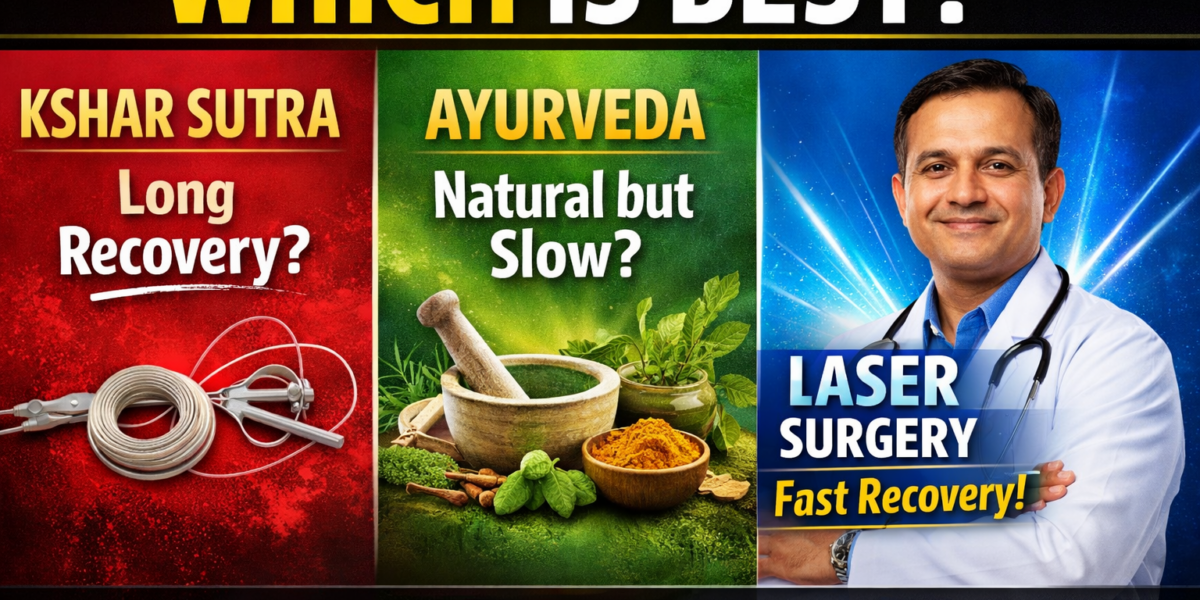
If you’re dealing with piles, you already know how uncomfortable — and honestly frustrating — it can be. The pain, the bleeding, the hesitation before using the washroom… it affects daily life more than people admit.
And once you start researching treatment options, things get confusing fast.
Laser surgery sounds modern and quick.
Kshar Sutra is traditional and widely trusted.
Ayurveda promises natural, root-cause healing.
So which one actually works for long-term relief? And more importantly — which one is right for your condition?
Let’s break this down clearly and practically.
First, A Quick Understanding of Piles
Piles (also known as hemorrhoids) are swollen veins in the lower rectum or around the anus. They can be:
Internal (inside the rectum)
External (outside the anus)
Prolapsed (bulging out during motion)
Thrombosed (painful clot formation)
Most people experience symptoms like:
Bleeding during bowel movement
Burning or pain while sitting
Itching around the anus
Swelling or a lump
Mucus discharge
Chronic constipation, long sitting hours, low-fiber diet, pregnancy, and obesity are common triggers.
The stage of piles (Grade 1 to 4) plays a major role in deciding the right treatment.
Related Topic : Fissure Treatment in Ayurveda: Does It Really Cure the Problem or Just Reduce Pain?
Laser Piles Surgery Treatment
What Actually Happens in Laser Surgery?
Laser piles treatment is a minimally invasive procedure. A focused laser beam is used to shrink and seal the swollen blood vessels causing the hemorrhoids.
It’s commonly advised for:
Grade 2 or Grade 3 piles
Frequent bleeding
Patients who want faster recovery
Why Many Patients Choose Laser
Minimal bleeding during procedure
Short hospital stay
Recovery within 7–14 days in most cases
Less post-operative pain compared to traditional open surgery
Faster return to routine work
But There Are Limitations
Laser fixes the swollen tissue — but it doesn’t automatically fix the root cause like chronic constipation. If diet and lifestyle remain unchanged, recurrence is possible.
It’s also generally more expensive compared to Ayurvedic approaches.
Does Ayurveda Cure Fissure Permanently or Only Control Pain?
This is the most searched and most misunderstood question.
Short answer
✔ Ayurveda can cure fissure permanently
❌ Only if treatment addresses the root cause, not just pain
What pain-only treatment does
- Reduces burning temporarily
- Relaxes muscles for short duration
- Does not correct constipation or digestion
What curative Ayurvedic treatment does
- Softens stool naturally
- Improves digestion and bowel rhythm
- Heals the fissure tissue internally
- Prevents recurrence
Ayurveda focuses on systemic healing, not cosmetic wound closure.
Kshar Sutra Therapy
What Is Kshar Sutra?
Kshar Sutra is an Ayurvedic para-surgical method. A medicated thread is applied to the pile mass, gradually cutting off blood supply and allowing the tissue to shrink and heal over time.
It is often recommended for:
External piles
Prolapsed piles
Patients looking for a traditional, non-laser alternative
Why It’s Still Popular
Time-tested technique
Effective for prolapsed tissue
Moderate cost compared to laser
Good long-term outcomes when performed properly
Things to Consider
Healing is slower than laser (usually 2–4 weeks). Some discomfort during the healing phase is normal. Follow-ups are essential.
It requires patience — but in the right case, it works well.
Ayurvedic Treatment for Piles
How Ayurveda Looks at Piles
In Ayurveda, piles (Arsha) are linked to digestive imbalance. Instead of only shrinking the swelling, the focus is on correcting the underlying cause — mainly poor digestion and constipation.
Treatment may include:
Herbal medicines
Dietary changes
Bowel regulation
Lifestyle modifications
Sitz bath and local applications
Best For
Early-stage piles (Grade 1–2)
Recurring piles after surgery
Chronic constipation cases
Patients preferring non-surgical management
Strengths
Addresses root digestive issues
Improves bowel habits
Preventive approach
Lower initial cost
Limitations
It works gradually. Severe Grade 3–4 prolapsed piles may not respond adequately with medicines alone.
Consistency is key. Without diet discipline, results are limited.
Side-by-Side Comparison
|
Factor
|
Laser
|
Kshar Sutra
|
Kshar Sutra
|
|---|---|---|---|
|
Pain
|
Mild–Moderate
|
Moderate
|
Low
|
|
Recovery
|
1–2 weeks
|
2–4 weeks
|
4–8 weeks
|
|
Cost
|
Higher
|
Moderate
|
Lower
|
|
Best For
|
Grade 2–3
|
Prolapsed / External
|
Early stage
|
|
Long-Term Prevention
|
Needs lifestyle change
|
Good
|
Strong focus
|
Which One Gives Long-Term Relief?
There isn’t a universal answer.
It depends on:
- Grade of piles
- Severity of bleeding
- Pain level
- Recurrence history
- Your ability to maintain diet and lifestyle changes.
General guidance:
- Grade 1–2: Ayurveda often works well.
- Grade 2–3 with bleeding: Laser offers quicker relief.
- Prolapsed piles: Kshar Sutra may be effective.
- Chronic recurrence: Combination approach works best — procedural treatment plus digestive correction.
Long-term relief doesn’t come from the procedure alone. It comes from fixing the cause.
Can Piles Come Back After Treatment?
Yes. With any method.
The most common reason isn’t treatment failure — it’s lifestyle.
Recurrence usually happens due to:
- Ongoing constipation
- Low fiber intake
- Straining during motion
- Sedentary routine
Prevention basics:
- 25–30 grams of fiber daily
- Adequate hydration
- Avoid long sitting on toilet
- Regular bowel timing
- Early consultation if symptoms return
What About Cost?
Costs vary depending on hospital, city, and case complexity.
- Laser treatment is generally higher priced.
- Kshar Sutra falls in a moderate range.
- Ayurvedic medicines are more affordable initially.
Insurance coverage also varies.
It’s important to discuss personalized cost after clinical evaluation rather than relying only on online estimates.
Is Laser Safer Than Kshar Sutra?
Both are safe when performed by experienced specialists in a proper medical setup.
Possible temporary issues may include:
- Mild bleeding
- Pain
- Swelling
- Rare urinary discomfort
Serious complications are uncommon with proper case selection.
Recovery and Diet Tips After Treatment
No matter which option you choose, recovery support matters.
General recommendations:
- High-fiber diet
- Plenty of water
- Sitz bath twice daily
- Light walking
- Avoid heavy lifting for a few weeks
- Avoid spicy and oily food during healing
Healing speed depends not just on the procedure — but on post-treatment care.
So, Which Treatment Should You Choose?
If you want faster recovery and minimal downtime — laser piles surgery may suit you.
If you have prolapsed or external piles and prefer a traditional approach — Kshar Sutra is an option.
If you are in early stages and want digestive correction — Ayurveda can help.
But the best decision is personalized. A proper clinical evaluation makes all the difference.
Choosing based only on cost or fear is not ideal. Choosing based on grade and medical advice gives better long-term results.
Frequently Asked Questions
It depends on the type and grade of piles. Laser is faster; Kshar Sutra may suit prolapsed cases.
It can manage early-stage piles effectively and reduce recurrence risk when lifestyle changes are followed.
Pain is usually manageable and milder compared to traditional open surgery.
Most people resume routine activities within one to two weeks.
Yes, especially if constipation and lifestyle triggers are not corrected.
Final Thoughts
There is no one-size-fits-all solution for piles.
Laser, Kshar Sutra, and Ayurvedic treatment each have their place. The key is correct diagnosis and realistic expectations.
If your goal is long-term relief, remember this:
The procedure treats the symptom. Your lifestyle determines the future.
Suffering from fissure pain that keeps coming back?
Get a root-cause Ayurvedic evaluation instead of temporary pain control.
👉 Consult the experts at Vedamrut Ayur Hospital
👉 Personalized fissure treatment based on digestion, lifestyle & chronicity
👉 Non-surgical, holistic, and long-term healing approach


