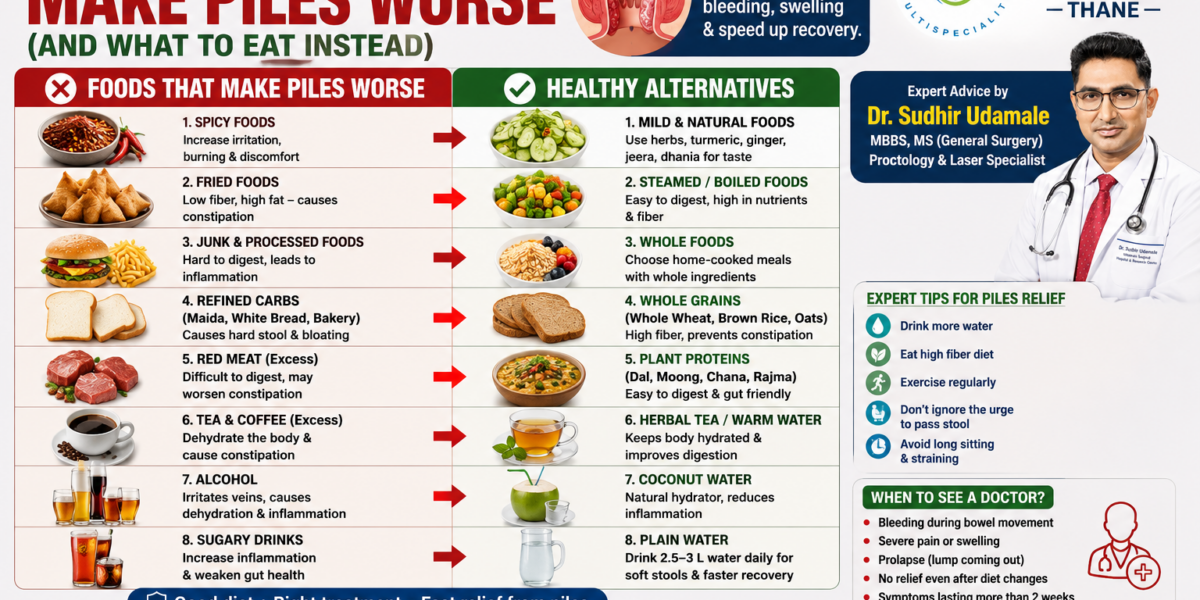
If you’re dealing with piles, you already know the drill. You sit down to eat something you love, and a few hours later, you’re paying for it — pain, itching, maybe even a bit of bleeding after using the washroom. It’s frustrating, it’s uncomfortable to talk about, and honestly, most people don’t realise how much their daily food choices are quietly making things worse.
The good news? A lot of piles-related discomfort is preventable. Once you understand which foods are working against your recovery, you can make small, practical swaps that actually make a difference. This guide walks you through exactly that — what to avoid, why it matters, and what to eat instead — along with real, practical advice for anyone looking for piles treatment in Thane.
Top Foods That Make Piles Worse
1. Spicy Foods
Green chillies, red chilli powder, Schezwan sauce, pickles — we love our spice in India, but if you have piles, this is one habit worth reconsidering. Here’s the myth-buster: spicy food doesn’t directly cause piles. But it absolutely worsens the burning sensation, pain, and irritation for people who already have them, especially during and after a bowel movement. If your piles flare up right after a spicy meal, this is likely why.
2. Fried Foods
Samosas, bhajiyas, chips, French fries — comfort food, yes, but also low in fibre and heavy on oil. Fried foods slow down digestion and tend to leave you with harder stools, which means more straining. If you’re serious about piles recovery, this is one of the first categories to cut back on.
3. Processed Foods
Pizza, burgers, instant noodles, and packaged snacks are convenient, but they’re almost always low in fibre and high in salt and preservatives — a combination that’s tough on your gut and makes constipation more likely.
4. Refined Flour (Maida)
White bread, bakery items, cakes, and biscuits are made from refined flour that has had most of its fibre stripped away. Regularly eating maida-based foods is one of the quieter, more overlooked causes of constipation.
5. Excess Red Meat
Red meat is fibre-free and can be harder to digest in large quantities, which slows things down in the gut. Moderation is key here — it’s not about cutting it out entirely, but not making it the centrepiece of every meal.
6. Alcohol
Alcohol is dehydrating, and dehydration is one of the fastest ways to end up with hard, difficult-to-pass stools. It can also irritate the digestive tract, making existing hemorrhoids more painful.
7. Excess Tea and Coffee
A cup or two is fine for most people, but excessive tea or coffee — especially replacing water with it — can contribute to dehydration and, in some people, aggravate bleeding. If you’re someone who drinks five or six cups a day and barely touches water, this is worth addressing.
8. Sugary Drinks
Cola, packaged juices, and other sugary beverages offer zero fibre and can disrupt healthy gut bacteria over time, indirectly affecting bowel regularity.
9. Low Water Intake
This might be the single biggest, most underrated cause of constipation — and by extension, piles. Without enough water, your body pulls moisture from your stool, making it harder and more difficult to pass. If you remember only one thing from this list, let it be this: drink more water.
10. Too Much Cheese
Dairy in excess, particularly cheese, is low in fibre and can be constipating for some people when eaten in large amounts. It’s not that you need to avoid it completely — just don’t make it a daily habit in large portions.
Related Topic : Fissure Treatment in Ayurveda: Does It Really Cure the Problem or Just Reduce Pain?
Foods That Actually Help Your Recovery
Now for the part that matters most — what to eat instead. Small swaps go a long way:
|
Avoid
|
Eat Instead
|
|---|---|
|
White bread
|
Whole wheat roti or bread
|
|
Chips
|
Roasted makhana
|
|
Cola
|
Coconut water
|
|
Pizza
|
Vegetable khichdi
|
|
Fried snacks
|
Steamed vegetables
|
The idea isn’t to eliminate every food you enjoy — it’s to build a plate that’s naturally higher in fibre and lower in the things that cause straining.
A Simple Indian Diet Plan for Piles
Morning: Start with a glass of warm water — it helps get your digestive system moving.
Breakfast: Oats, poha, or upma — all light, fibre-friendly, and easy on the gut.
Lunch: Dal, rice, a good portion of vegetables, and a side salad.
Evening: A piece of fruit instead of packaged snacks.
Dinner: Keep it light — a khichdi or a warm soup works well, especially if you tend to eat late.
This isn’t a restrictive diet plan. It’s simply built around everyday Indian food, tweaked slightly to support your gut.
A Real Patient Story (Anonymised)
One of our patients, a 38-year-old working professional based in Thane, came to us after dealing with bleeding piles for close to eight months. His routine was familiar to a lot of us — spicy street food nearly every day, barely a litre of water consumed, and constipation almost five days a week thanks to long hours at a desk.
After a proper clinical evaluation, we put together a personalised treatment plan for him — a high-fibre diet, better hydration habits, and some practical lifestyle changes, alongside appropriate medical management. Over the following weeks, his symptoms improved significantly with consistent adherence to the plan.
Every case is different, and outcomes vary from person to person, but this is a good example of how diet, combined with proper medical care, can genuinely support recovery.
The Excuses We Hear All the Time
If any of these sound familiar, you’re definitely not alone:
“I only get piles flare-ups after eating spicy food.” — This is common, and it’s exactly why identifying your personal trigger foods matters so much.
“I drink tea instead of water.” — Tea isn’t a replacement for water. Try keeping a bottle at your desk as a visual reminder.
“I sit for 10 hours a day.” — Prolonged sitting increases pressure on the rectal area. Even short 5-minute walks every couple of hours can help.
“I eat outside almost every day.” — Totally understandable with today’s schedules, but try to balance outside meals with fibre-rich home meals when you can.
“I don’t have time for breakfast.” — Even something as simple as soaked oats or a banana takes two minutes and makes a real difference over time.
Busting the Biggest Myths About Piles
There’s a lot of misinformation floating around, so let’s clear a few things up:
- “Bananas cause piles.” False — bananas are actually fibre-rich and generally considered gut-friendly.
- “Milk always causes constipation.” Not necessarily true for everyone; it varies by individual tolerance.
- “Piles can be cured with food alone.” Diet helps enormously, but moderate to severe cases usually need proper medical evaluation and treatment.
- “Surgery is always necessary.” Not true — many cases are managed successfully with diet, lifestyle changes, and non-surgical treatment.
- “Bleeding is normal forever.” No — bleeding should always be evaluated by a doctor, not brushed off as something to just live with.
When Diet Alone Isn't Enough
Diet plays a huge role in prevention and recovery, but it isn’t a substitute for medical care. Please see a doctor promptly if you experience:
- Heavy or repeated bleeding
- Severe or worsening pain
- A prolapsed hemorrhoid (one that protrudes and doesn’t go back in on its own)
- Constipation that doesn’t improve despite diet changes
- Symptoms lasting more than two weeks
- Frequent, recurring hemorrhoids
- Unexplained weight loss or a sudden change in bowel habits
That last point is particularly important — persistent symptoms should always be checked out to rule out other underlying conditions. If you’re looking for a piles doctor in Thane, don’t wait until the discomfort becomes unbearable. Early evaluation almost always leads to easier, faster treatment.
- Aim for 25–35 grams of fibre daily through fruits, vegetables, and whole grains.
- Drink roughly 2.5–3 litres of water a day, adjusted to your activity level and body needs.
- Avoid sitting for long, unbroken stretches — get up and move every hour or so.
- Don’t delay the urge to use the washroom; holding it in makes stools harder over time.
- Avoid straining — if it’s not happening naturally within a few minutes, don’t force it.
- Try to get at least 30 minutes of physical activity daily.
- Never self-medicate for prolonged bleeding — get it checked by a specialist.
Frequently Asked Questions
Can spicy food cause piles?
Not directly, but it can worsen the pain, burning, and irritation in people who already have piles.
Is chicken good for piles?
In moderate amounts, yes — but pair it with fibre-rich sides rather than eating it alone.
Is rice bad for hemorrhoids?
Plain rice in moderation is fine; just balance it with vegetables and fibre.
Can eggs worsen constipation?
Eggs are low in fibre, so eating them without any fibre-rich sides can contribute to constipation over time.
Is curd good for piles?
Yes, curd generally supports gut health and can aid digestion for most people.
Is papaya good for hemorrhoids?
Yes — papaya is high in fibre and water content, making it one of the better fruit choices.
Which fruit heals piles fastest?
No single fruit “heals” piles, but papaya, apples, and pears are commonly recommended for their fibre content.
Can coffee increase bleeding?
Excess coffee can contribute to dehydration, which indirectly worsens symptoms including bleeding.
Is alcohol harmful in piles?
Yes, due to its dehydrating and irritant effects on the digestive tract.
Is banana good for piles?
Yes, bananas are fibre-rich and generally considered gut-friendly.
Can fasting cure piles?
No — fasting can sometimes worsen constipation. Speak to a doctor before making major dietary changes.
What breakfast is best for piles patients?
Oats, poha, or upma — light and fibre-rich options.
Can I eat sweets?
Occasionally, in moderation, but not as a daily habit.
What vegetables should I eat?
Leafy greens, carrots, beans, and other fibre-rich vegetables.
Which dry fruits help piles?
Soaked almonds, figs, and prunes are commonly recommended.
Can I eat dates?
Soaked almonds, figs, and prunes are commonly recommended.
Is buttermilk good?
Yes, it aids digestion and helps keep you hydrated.
Can I eat paneer?
No food “shrinks” hemorrhoids directly, but a high-fibre, well-hydrated diet reduces straining and supports the body’s natural healing process.
What foods shrink hemorrhoids?
In moderation, yes — just don’t overdo it, as excess dairy can be constipating for some.
Final Thoughts
Piles are manageable, and diet is one of the most powerful tools you have — but it works best alongside proper medical guidance. If your symptoms have lasted more than a couple of weeks, or if you’re noticing bleeding, don’t wait it out. Getting the right piles treatment in Thane early on can save you months of unnecessary discomfort.
Small changes — more water, more fibre, fewer fried and processed foods — genuinely add up. Start there, and if things don’t improve, reach out to a specialist who can guide you through the next steps.