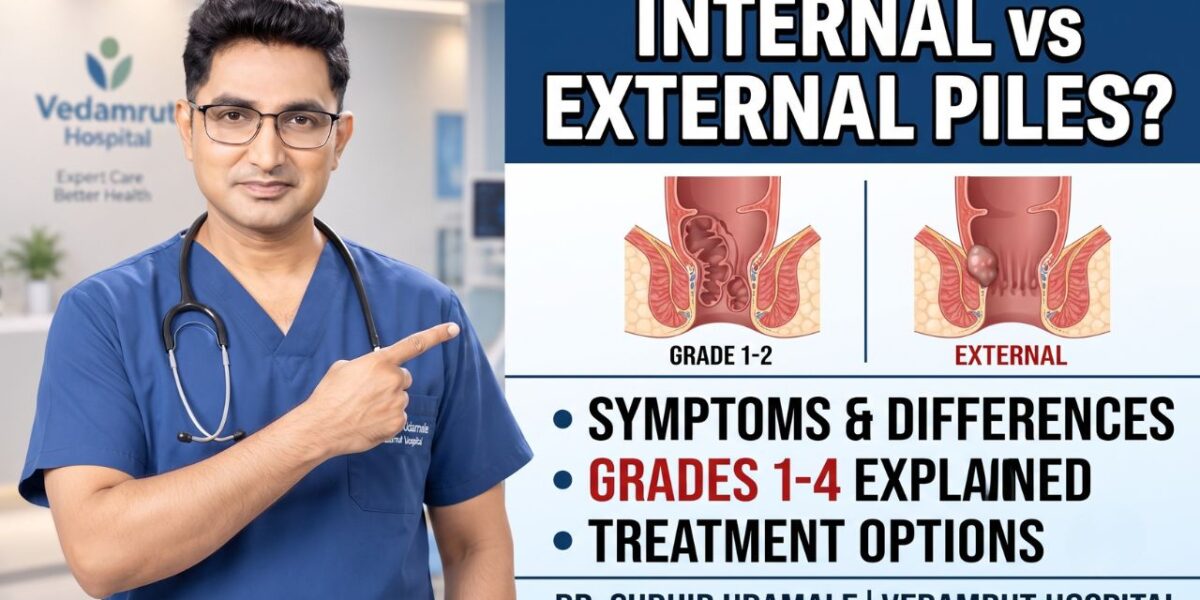
Noticing blood after a bowel movement or a lump near the anus is worrying, and many people don’t know whether they are dealing with internal or external piles. The two types behave differently, cause different symptoms, and are managed differently. This guide explains the difference, what Grade 1, 2, 3 and 4 piles mean, and how treatment is decided.
What Are Piles or Hemorrhoids?
Piles (hemorrhoids) are swollen blood vessels and supporting tissue in the lower rectum and anus. Everyone has this tissue, and it becomes a problem only when it enlarges or slips downward. Common triggers include constipation, straining, prolonged sitting on the toilet, low fibre intake, pregnancy and chronic coughing.
Internal Piles: Symptoms and Causes
Internal piles often cause bright red bleeding without pain, because the lining of the rectum has few pain-sensing nerves. Other symptoms include:
- Blood on toilet paper, in the toilet bowl or on the stool
- A feeling of incomplete evacuation
- Mucus discharge
- A soft lump that comes out during a bowel movement (prolapse)
The main causes are chronic constipation, repeated straining, a low-fibre diet, long toilet sittings, obesity and pregnancy.
External Piles: Symptoms and Causes
External piles sit in skin that is rich in nerves, so they are more likely to cause discomfort. Symptoms include:
- A swelling or lump near the anus
- Itching and irritation
- Pain, especially when sitting or passing stool
- Occasional bleeding
A thrombosed external pile happens when a blood clot forms inside it. This causes sudden, severe pain and a hard, bluish or discoloured lump. It needs medical attention if the pain is intense.
Internal vs External Piles: What's the Difference?
These three conditions are often confused because all of them affect the anal region and can cause bleeding or discomfort.
|
Features
|
Internal Piles
|
External Piles
|
|---|---|---|
|
Location
|
Inside the rectum
|
Under the skin around the anus
|
|
Main symptom
|
Bleeding during or after stool
|
Lump, swelling, itching, pain
|
|
Pain
|
Usually painless
|
Can be painful, especially if thrombosed
|
|
Visible?
|
Only if they prolapse
|
Often felt or seen as a lump
|
|
Grading (1-4)?
|
Yes
|
No
|
Neither type is automatically “worse.” Symptoms, prolapse, thrombosis and examination findings all matter.
Can You Have Both Internal and External Piles?
Yes. This is called mixed piles, and it is quite common. A person may have bleeding from internal piles along with swelling or itching from external ones. Laser Pies Treatment is planned after a doctor examines both areas.
What Do Grade 1, 2, 3 and 4 Piles Mean?
Doctors use the Grade I-IV system to describe internal piles based on how far they prolapse (slip down). The grade reflects prolapse, not pain.
Grade 1 Piles
Grade 1 piles stay inside the anal canal and do not prolapse. The usual symptom is painless bleeding during stool. Diet, fibre, hydration and medical management are often the starting point.
Grade 2 Piles
Grade 2 piles prolapse during a bowel movement but return inside on their own. Bleeding may continue, and some people notice a lump during straining.
Grade 3 Piles
Grade 3 piles prolapse and must be pushed back manually. People often describe piles that “come out and need to be pushed inside.” Discomfort, mucus and bleeding are common.
Grade 4 Piles
Grade 4 piles remain permanently prolapsed and cannot be pushed back. They may cause pain, irritation, bleeding, or complications such as thrombosis.
Important: Grade can only be confirmed by clinical examination. Other conditions, such as anal fissure, rectal prolapse or, rarely, colorectal disease, can mimic piles, so please don’t self-diagnose your grade at home.
Are External Piles Graded 1-4?
No. The Grade I-IV system applies to internal piles because it measures prolapse. External piles are described by their features instead, such as swelling, pain or thrombosis. So “Grade 4 piles” does not mean external piles.
When Should You See a Piles Specialist?
See a doctor promptly if you have:
- Rectal bleeding that is heavy, repeated or lasts more than a few days
- Severe pain or a hard, painful lump
- Piles that stay outside or cannot be pushed back
- Changes in bowel habits, weight loss or dark or black stools
- Dizziness, weakness or signs of anaemia
- Symptoms that don’t improve with a week or two of home care
Frequently Asked Questions About Piles
Internal piles form inside the rectum and often cause painless bleeding. External piles form under the skin around the anus and tend to cause lumps, itching and pain.
Usually not, because the rectal lining has few pain nerves. Pain may appear if they prolapse, become trapped or are accompanied by a fissure.
Often, yes, especially thrombosed external piles. But pain depends on the individual case.
Yes. These are called mixed piles.
No. The grading system applies to internal piles.
No grade automatically needs surgery. Surgery is more often considered for Grades 3 and 4, or when other treatments fail, but the decision depends on your symptoms and examination.
Often, yes. Diet, fibre, hydration, medication and sometimes office procedures can control symptoms.
Laser treatment may be an option for some patients, depending on size, prolapse and other findings. A specialist must assess suitability.
Yes. Painless bright red bleeding is the most common sign of internal piles, but it should still be examined to rule out other causes.
Only a clinical examination can confirm it. The grade depends on whether the pile prolapses, goes back by itself, needs pushing back, or stays out.
Final Thoughts
Internal and external piles differ in location, symptoms and how they are graded and treated. Understanding the pattern can help you describe your symptoms clearly, but only an examination can confirm what is happening and which treatment suits you. If you notice bleeding, a persistent lump or ongoing discomfort, don’t delay.
Book a consultation with our piles specialist in Thane for an accurate diagnosis and a personalised treatment plan. [Book Appointment → Vedamrut Hospital]