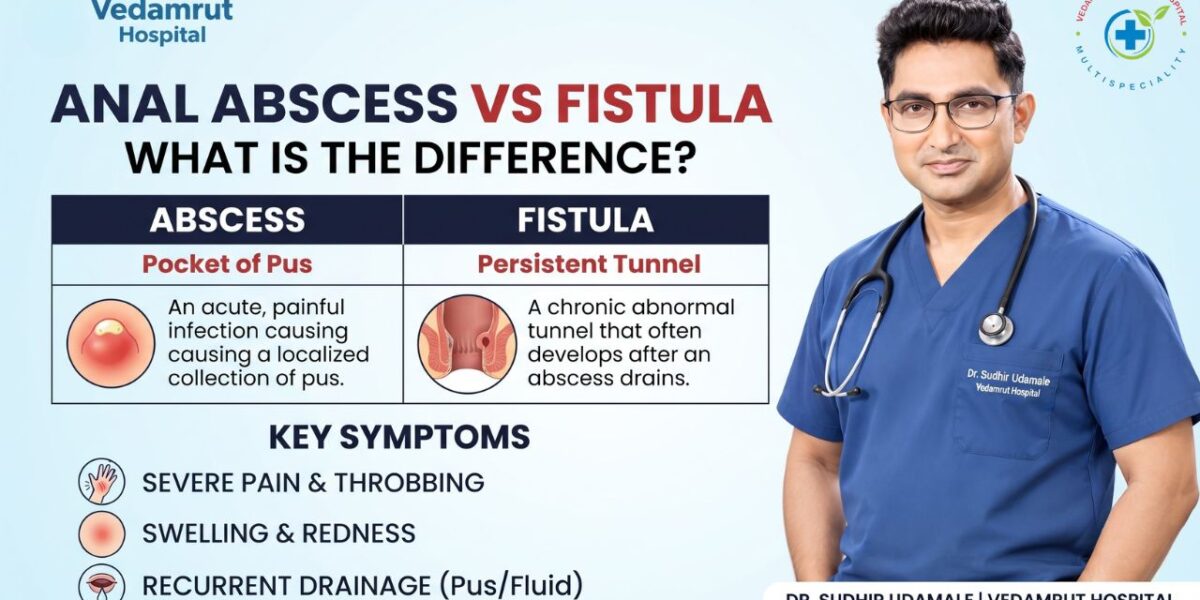
An abscess is a pocket of pus; a fistula is a tunnel. That is the simplest way to understand the difference between an anal abscess and an anal fistula. An anal abscess is an active infection with a collection of pus near the anus. An anal fistula is an abnormal passage connecting the anal canal to the skin nearby. The two are closely related, but they are not the same condition, and the right treatment depends on which one you have. This guide explains the symptoms, causes, treatment and warning signs so you know when to get medical help.
What Is an Anal Abscess?
An anal (or perianal) abscess is a collection of pus caused by infection in or around the anus. It usually begins when a small anal gland becomes blocked and infected.
Common symptoms include:
- A painful, tender lump near the anus
- Swelling, redness and warmth
- Throbbing pain that may worsen when sitting, coughing or passing stool
- Fever, chills or feeling generally unwell
Some abscesses sit deep inside and do not show as an obvious lump, so pain and pressure may be the only clues. An abscess generally needs prompt medical assessment and often requires drainage by a healthcare professional. Never squeeze, puncture or try to drain it at home.
Anal Abscess vs Fistula: Key Differences
|
Feature
|
Anal abscess
|
Anal fistula
|
|---|---|---|
|
What is it?
|
A pocket of pus caused by infection
|
An abnormal tunnel between the anal canal and nearby skin
|
|
Main problem
|
Active infection and pus collection
|
A persistent passage that may drain fluid
|
|
Painful, swollen lump
|
Recurrent or persistent drainage
|
|
|
Skin boil
|
Localised skin lump, may drain
|
|
|
Infected cyst
|
Localised lump with drainage
|
|
|
Hidradenitis suppurativa
|
Recurrent boil-like lesions, often in several skin folds
|
|
|
Pilonidal disease
|
Usually higher in the buttock cleft, not right beside the anus
|
|
|
Hemorrhoid (piles)
|
Lump, bleeding, itching; pus is not typical
|
|
|
Anal fissure
|
Tear with sharp pain and bleeding, not a persistent external hole
|
Conditions such as Crohn’s disease can also be linked to fistulas, which is another reason a proper assessment matters.
Anal Fistula vs Abscess vs Piles vs Fissure
Abscess vs fistula: An abscess is an acute collection of pus, usually painful and swollen. A fistula is the persistent tunnel that may remain afterwards. An abscess is often the early stage and a fistula the chronic stage.
Fistula vs piles: Piles (hemorrhoids) usually cause lumps, itching or bright-red bleeding. A persistent external opening with pus or recurrent drainage is not a typical symptom of piles and should be assessed. See our guide on piles treatment.
Fistula vs fissure: A fissure is a tear in the anal lining that causes sharp pain during and after a bowel movement, with bright-red bleeding. A fistula more commonly involves an external opening, recurrent drainage, pus and repeated swelling. Read about anal fissure treatment.
When Should You See a Doctor?
See a doctor soon if:
- The opening persists or doesn’t heal
- Pus or blood keeps draining
- The same swelling or lump returns
- You have had an anal or perianal abscess before
- You have recurrent pain or a persistent lump
- There is foul-smelling discharge
Seek urgent medical care if you have:
- Severe or rapidly worsening pain
- Fever or chills
- Fast-increasing swelling
- Significant redness or warmth
- Difficulty passing urine
- Significant bleeding
- A feeling of being very unwell
Important: Do not squeeze, puncture or repeatedly drain a lump or opening near the anus yourself. An active abscess may need professional drainage, and delaying assessment can allow infection to persist or recur.
How Is an Anal Fistula Diagnosed?
Diagnosis starts with your history (previous abscesses, recurring drainage) and a physical examination of the area, including the location of the opening. Depending on the case, your doctor may also do a digital rectal examination, anoscopy or proctoscopy, and imaging.
When Is an MRI Needed?
Not everyone needs an MRI. Imaging such as MRI or ultrasound is considered mainly when:
- The fistula looks complex or may have several branches
- The opening isn’t obvious
- The condition keeps coming back
- An abscess is hard to locate
- Crohn’s disease is suspected
How Is an Anal Fistula Treated?
Treatment depends on the fistula’s position, whether it branches, and how much of the anal sphincter muscle is involved, not simply on the presence of a hole. Options include:
- Treatment of any associated abscess
- Fistulotomy, opening the tract so it can heal
- Seton placement, a thread that keeps the tract draining and protects the sphincter
- LIFT (ligation of the intersphincteric fistula tract)
- Advancement flap
- Selected minimally invasive techniques, including laser-based procedures
Your surgeon will recommend the approach that best clears the tract while protecting bowel control. You can read more on our pages for anal fistula treatment and laser fistula treatment.
Can an Anal Fistula Heal Without Surgery?
Usually not. Home care such as keeping the area clean and comfortable can ease symptoms, but a true fistula tunnel generally does not close on its own, and surgery is commonly needed. Antibiotics may help treat an associated infection but don’t normally cure the fistula itself.
Frequently Asked Questions
Sometimes. It may be the external opening of a fistula, especially with recurrent pus or a past abscess, but boils, cysts and other conditions can look similar. Only an examination can confirm the cause.
Common causes include an anal fistula, a draining perianal abscess, a skin boil, an infected cyst and hidradenitis suppurativa.
It can look like a tiny hole, a pimple-like spot or a small wound that doesn't fully heal, and may drain pus, blood or other fluid.
Yes. Pain varies, and some people mainly notice drainage. Pain often increases when drainage is blocked or an abscess develops.
Pus usually indicates infection, most often from an abscess or fistula. See a doctor for assessment.
Repeated drainage from one spot can suggest a persistent tunnel such as a fistula. The tract keeps draining until it is properly treated
The external opening can seal temporarily while the tunnel remains, leading to swelling and pain until it drains again.
Yes. An abscess that drains can leave a tunnel behind, forming a fistula, though not every abscess does.
Piles and fistulas are different conditions. A persistent opening with pus is not typical of piles and should be checked.
An abscess is an acute pocket of pus. A fistula is a chronic tunnel that can remain after the abscess drains.
It's unlikely. The opening may close temporarily, but the tract usually remains and symptoms return.
No. Antibiotics can treat infection but do not normally close the tunnel.
Soon if it persists, drains pus or blood, or keeps recurring, and urgently if you have fever, severe pain or fast-spreading swelling.
Get Expert Help at Vedamrut Hospital, Thane
If you have a small hole near your anus that leaks, recurs or won’t heal, an early examination by a colorectal specialist can give you clarity and a clear plan. Our team at Vedamrut Hospital in Thane evaluates each case individually and recommends treatment based on your anatomy, not a one-size-fits-all approach.
Book an appointment with our anal fistula specialist today.
This article is for general information and does not replace a medical examination. Please consult a qualified doctor for diagnosis and treatment.