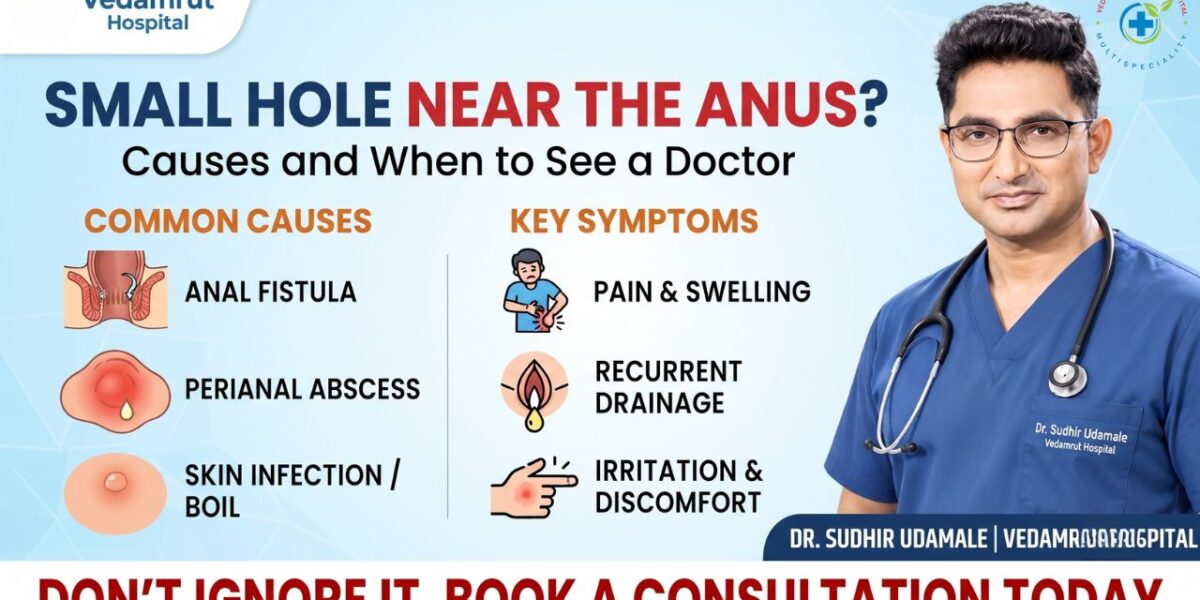
A small hole or opening near the anus can have several causes. In some people it is the external opening of an anal fistula, especially when it repeatedly drains pus or blood, becomes swollen or painful, or appears after an anal abscess. However, not every small hole near the anus is a fistula. A doctor usually needs to examine the area to find the cause.
This guide explains what a small hole near the anus can mean, how to tell the possible causes apart, and when you should get medical help.
What Does a Small Hole Near Anus Mean?
A small opening in the skin around the anus is a sign that something has created a pathway or drainage point. Possible causes include:
- Anal fistula, an abnormal tunnel between the inside of the anus and the skin
- Perianal abscess that is draining or has drained
- Skin infection or boil
- Infected cyst
- Hidradenitis suppurativa, which causes recurrent boil-like lesions
- Pilonidal disease, if the opening is higher up in the cleft between the buttocks
- Other anorectal or skin conditions
A small opening with recurrent drainage deserves particular attention, because an anal fistula commonly has an external opening in the skin near the anus.
Is a Small Hole Near the Anus an Anal Fistula?
It can be, but a hole alone does not confirm it. A fistula becomes more likely when you notice:
- Pus repeatedly coming from the same opening
- Foul-smelling or blood-stained discharge
- Swelling or a lump that comes and goes
- A previous anal or perianal abscess
- Pain that eases after pus drains
- The same “boil” returning in the same place
- Skin irritation or persistent wetness around the anus
If several of these sound familiar, see a doctor rather than trying to work it out yourself. Appearance alone is not enough for a diagnosis.
What Is an Anal Fistula?
An anal fistula (also called fistula in ano or perianal fistula) is an abnormal tunnel that connects the inside of the anus or rectum with the skin around the anus. The skin end is the “external opening”, which is the small hole people usually notice.
Learn more about symptoms and options on our anal fistula treatment page.
How Does an Anal Fistula Develop After an Abscess?
Anal abscesses are the most common cause of anal fistulas. The usual sequence is:
- An anal gland becomes infected
- An abscess (a pocket of pus) forms
- The abscess drains, either on its own or through a procedure
- A tunnel may remain between the anal canal and the skin, which is a fistula
Not every abscess becomes a fistula. But if drainage continues, or swelling and pain keep returning after an abscess, a fistula should be considered. Read more about anal abscess.
What Does an Anal Fistula Opening Look Like?
The external opening can look like:
- A tiny hole or small opening
- A pimple-like spot
- A red or irritated area
- A small wound that never fully heals
- An opening that drains on and off
Drainage may include pus, blood or, sometimes, stool or gas. Because many conditions look similar, please don’t rely on online pictures to diagnose yourself.
Small Hole Near the Anus With Pus: What Could It Mean?
Pus coming from a hole near the anus usually points to infection or a draining tract. The most common explanations are a draining perianal abscess or an anal fistula. Boils, infected cysts and hidradenitis suppurativa can also cause it.
If pus keeps coming from the same spot, or the area repeatedly swells and drains, the likelihood of a fistula goes up. This is not something that usually clears on its own, so it is worth getting checked.
Pus but no visible hole? An abscess can sit deeper than it looks from outside. Painful swelling with pus and no obvious opening still needs a clinical examination.
Small Hole Near the Anus Without Pain: Should You Worry?
No pain does not rule out a fistula. A fistula doesn’t necessarily hurt all the time. Many people mainly notice drainage, dampness or skin irritation, while pain and swelling tend to flare when drainage is blocked or a new abscess forms.
A painless hole that persists, leaks or keeps returning should still be examined.
What If the Hole Keeps Opening and Closing?
This is a very common concern. In some fistulas, the external opening can close temporarily while the tunnel underneath remains. Pressure and infection then build up, causing pain and swelling, until the opening breaks and drains again.
This stop-start pattern is a reason to be checked, not a sign that the problem has gone away.
What If the Pus Stops Coming Out?
If drainage stops but the hole is still there, don’t assume you are cured. The opening may have closed temporarily while the tract remains underneath, and symptoms can return. If you’ve had repeated episodes, a medical review is the safest next step.
Other Causes of a Small Hole or Opening Near the Anus
A good doctor will consider several possibilities before reaching a diagnosis. This is why “hole near the anus” is not automatically a fistula.
|
Possible cause
|
Typical clues
|
|---|---|
|
Anal Fistula
|
Small opening with recurrent drainage or abscesses
|
|
Perianal abscess
|
Painful, red, swollen area; pus; possible fever
|
|
Painful, swollen lump
|
Recurrent or persistent drainage
|
|
Skin boil
|
Localised skin lump, may drain
|
|
Infected cyst
|
Localised lump with drainage
|
|
Hidradenitis suppurativa
|
Recurrent boil-like lesions, often in several skin folds
|
|
Pilonidal disease
|
Usually higher in the buttock cleft, not right beside the anus
|
|
Hemorrhoid (piles)
|
Lump, bleeding, itching; pus is not typical
|
|
Anal fissure
|
Tear with sharp pain and bleeding, not a persistent external hole
|
Conditions such as Crohn’s disease can also be linked to fistulas, which is another reason a proper assessment matters.
Anal Fistula vs Abscess vs Piles vs Fissure
Abscess vs fistula: An abscess is an acute collection of pus, usually painful and swollen. A fistula is the persistent tunnel that may remain afterwards. An abscess is often the early stage and a fistula the chronic stage.
Fistula vs piles: Piles (hemorrhoids) usually cause lumps, itching or bright-red bleeding. A persistent external opening with pus or recurrent drainage is not a typical symptom of piles and should be assessed. See our guide on piles treatment.
Fistula vs fissure: A fissure is a tear in the anal lining that causes sharp pain during and after a bowel movement, with bright-red bleeding. A fistula more commonly involves an external opening, recurrent drainage, pus and repeated swelling. Read about anal fissure treatment.
When Should You See a Doctor?
See a doctor soon if:
- The opening persists or doesn’t heal
- Pus or blood keeps draining
- The same swelling or lump returns
- You have had an anal or perianal abscess before
- You have recurrent pain or a persistent lump
- There is foul-smelling discharge
Seek urgent medical care if you have:
- Severe or rapidly worsening pain
- Fever or chills
- Fast-increasing swelling
- Significant redness or warmth
- Difficulty passing urine
- Significant bleeding
- A feeling of being very unwell
Important: Do not squeeze, puncture or repeatedly drain a lump or opening near the anus yourself. An active abscess may need professional drainage, and delaying assessment can allow infection to persist or recur.
How Is an Anal Fistula Diagnosed?
Diagnosis starts with your history (previous abscesses, recurring drainage) and a physical examination of the area, including the location of the opening. Depending on the case, your doctor may also do a digital rectal examination, anoscopy or proctoscopy, and imaging.
When Is an MRI Needed?
Not everyone needs an MRI. Imaging such as MRI or ultrasound is considered mainly when:
- The fistula looks complex or may have several branches
- The opening isn’t obvious
- The condition keeps coming back
- An abscess is hard to locate
- Crohn’s disease is suspected
How Is an Anal Fistula Treated?
Treatment depends on the fistula’s position, whether it branches, and how much of the anal sphincter muscle is involved, not simply on the presence of a hole. Options include:
- Treatment of any associated abscess
- Fistulotomy, opening the tract so it can heal
- Seton placement, a thread that keeps the tract draining and protects the sphincter
- LIFT (ligation of the intersphincteric fistula tract)
- Advancement flap
- Selected minimally invasive techniques, including laser-based procedures
Your surgeon will recommend the approach that best clears the tract while protecting bowel control. You can read more on our pages for anal fistula treatment and laser fistula treatment.
Can an Anal Fistula Heal Without Surgery?
Usually not. Home care such as keeping the area clean and comfortable can ease symptoms, but a true fistula tunnel generally does not close on its own, and surgery is commonly needed. Antibiotics may help treat an associated infection but don’t normally cure the fistula itself.
Frequently Asked Questions
Sometimes. It may be the external opening of a fistula, especially with recurrent pus or a past abscess, but boils, cysts and other conditions can look similar. Only an examination can confirm the cause.
Common causes include an anal fistula, a draining perianal abscess, a skin boil, an infected cyst and hidradenitis suppurativa.
It can look like a tiny hole, a pimple-like spot or a small wound that doesn't fully heal, and may drain pus, blood or other fluid.
Yes. Pain varies, and some people mainly notice drainage. Pain often increases when drainage is blocked or an abscess develops.
Pus usually indicates infection, most often from an abscess or fistula. See a doctor for assessment.
Repeated drainage from one spot can suggest a persistent tunnel such as a fistula. The tract keeps draining until it is properly treated
The external opening can seal temporarily while the tunnel remains, leading to swelling and pain until it drains again.
Yes. An abscess that drains can leave a tunnel behind, forming a fistula, though not every abscess does.
Piles and fistulas are different conditions. A persistent opening with pus is not typical of piles and should be checked.
An abscess is an acute pocket of pus. A fistula is a chronic tunnel that can remain after the abscess drains.
It's unlikely. The opening may close temporarily, but the tract usually remains and symptoms return.
No. Antibiotics can treat infection but do not normally close the tunnel.
Soon if it persists, drains pus or blood, or keeps recurring, and urgently if you have fever, severe pain or fast-spreading swelling.
Get Expert Help at Vedamrut Hospital, Thane
If you have a small hole near your anus that leaks, recurs or won’t heal, an early examination by a colorectal specialist can give you clarity and a clear plan. Our team at Vedamrut Hospital in Thane evaluates each case individually and recommends treatment based on your anatomy, not a one-size-fits-all approach.
Book an appointment with our anal fistula specialist today.
This article is for general information and does not replace a medical examination. Please consult a qualified doctor for diagnosis and treatment.